Skyscrapers always make an impact with their shiny glass exteriors and towering presence. But have you ever wondered how these huge buildings manage to stay so clean, especially way up near the roof?
Cleaning skyscrapers isn’t a simple job, and it’s definitely not something your typical window cleaner can tackle. It takes skill, special equipment, and courage to keep these tall commercial buildings looking good from the street all the way up to the clouds.
One common way to clean skyscrapers is through rope access — where cleaners use harnesses and ropes to lower themselves down the building.
Keeping the outside of a tall building clean is more important than just how it looks. It helps the building last longer, work better, and hold its value.
When the outside of a building isn’t cared for, it can lead to bigger problems, like damage to the structure and a loss of appeal.
Here’s an easy-to-understand guide to how cleaning tall buildings works, the problems that come up, and why it matters so much.
Why External Cleaning Is Important for Skyscrapers
Think of the outside of a skyscraper like skin. Just as you need to take care of your own skin, buildings need their “skin” cleaned to look good and stay in shape.
A clean outside isn’t just about appearance — it’s a basic part of taking care of the whole building.
How Clean Facades Help Buildings Stand Out
First impressions count, especially for businesses and commercial real estate. A clean, glossy skyscraper shows that the owners care about the details and want to attract tenants and visitors.
Clean high-rise buildings look much better, so people are more likely to want to rent or visit. It directly affects the building’s worth. People usually aren’t interested in offices that look dirty or neglected.
Clean windows also let in more daylight, which can help save on electricity bills by cutting down the need for lights. On top of that, more sunlight makes offices brighter, which can improve the overall mood for people working inside.
What Happens If Tall Buildings Aren’t Cleaned?
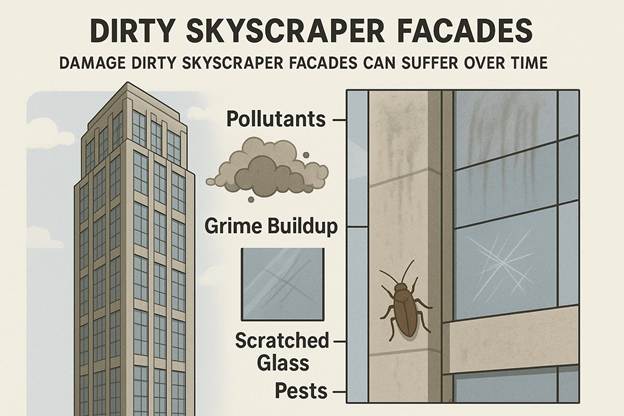
If the outside of a skyscraper isn’t cleaned, problems add up fast. Dirt, pollution, and other grime aren’t just ugly — they can also eat away at the building materials.
Over time, all that buildup can scratch windows and damage the facade, leading to expensive repairs. Dirty windows and surfaces can break down, block views, and even become unsafe if left for too long.
Tall buildings often have tricky designs too, so some spots are harder to reach and clean. These areas can gather more dirt, or even attract pests, which could lead to safety and health hazards if ignored.
Main Difficulties in Cleaning Tall Commercial Buildings
Cleaning a regular two-story building is easy compared to cleaning skyscrapers. The problems faced by skyscraper cleaning teams are way bigger — quite literally!
Why Is Skyscraper Cleaning So Hard?
The biggest challenge is the height. Getting up to those windows is tough and adds a lot of risk for workers.
This kind of cleaning takes careful planning, special gear, and a well-trained crew.
Many skyscrapers also have special designs, with curves, sharp angles, and a mix of surfaces. There’s no “one way” to clean every building. Each one needs its own cleaning plan.
The Role of Weather and the Environment in Scheduling Cleaning
Weather is a big factor. Strong winds make it risky or impossible to work high off the ground. Rain can create streaks or wash away cleaning solutions before they work. Extremely hot or cold weather can affect the tools and chemicals being used, making work less safe or less effective. Work is often paused during bad weather to keep everyone safe. Cleaning is usually planned for the spring and autumn, when the weather is milder and safer for exterior work.
Dealing With Different Building Materials and Glass Types
Modern skyscrapers use many materials, from glass and metal to stone and solar panels. Each material requires a unique cleaning approach.
Even the style of window frames can make the job harder — some windows slide up and down and are tricky to reach from inside. Each window needs to be cleaned thoroughly, inside and out, for spotless results.
Ways to Keep Skyscraper Exteriors Clean
Because every building is different, several smart cleaning methods have been developed for these tough jobs.
The best method to use depends on the design, height, and what needs to be reached.
1. Rope Access
Rope access is frequently used for window cleaning at height. The cleaners, sometimes called “urban climbers,” rely on ropes and harnesses to do their job. This way, they can get to difficult areas and special corners.
It’s also usually cheaper and less of an interruption since it doesn’t require lots of heavy gear like scaffolding. Setting up and packing away is fast, which is good for busy locations.
Still, rope access needs cleaners with special training and is very weather-sensitive. It can also take more time for big, flat buildings if compared to platform-based methods.
2. Suspended Platforms and Cradles for Large Surfaces
For skyscrapers with straight, flat walls, cleaners use suspended platforms, sometimes called cradles or Building Maintenance Units (BMUs). These solid platforms hang by cables from the roof, letting workers ride up and down to reach the windows. They’re great for covering big areas efficiently on tall office buildings.
If a building already has a permanent cradle system, cleaning can go even faster. All equipment needs to be checked before every use to make sure it’s safe.
3. Water-Fed Pole Systems for Shorter Sections
Water-fed poles aren’t just for small buildings — powerful versions can reach up to 82 feet. For mid-rise or lower high-rise buildings, water-fed poles with soft brushes and pure water are practical for cleaning windows from the ground.
Cleaners use filtered water so there are no streaks. However, these systems are only good for lower levels and can be disruptive in busy places, so work may need to be planned around foot traffic.
4. Boom Lifts and Mobile Platforms
Some skyscrapers have special designs or awkward spots where rope access or cradles can’t reach. Boom lifts and mobile elevating platforms are used to reach these tricky areas. These platforms, also called cherry pickers, let cleaners get where they need to go if the ground is flat enough for the equipment.
Sometimes, work with these machines needs approval from local authorities, especially if they block sidewalks or roads, so these jobs are often scheduled outside business hours.
5. Robots and Automated Cleaning Tools
Technology is changing the way skyscraper cleaning is done, too. Some companies use robots that stick to the outside walls and scrub the windows. These robotic cleaners are especially useful on flat glass surfaces and can improve worker safety.
While robots haven’t replaced human cleaners yet, they’re being used more and more for repetitive or risky jobs.
Frequently Asked Questions
How Long Does Skyscraper Cleaning Take?
The size of the building and size of the crew both affect how long cleaning takes. A smaller skyscraper might take a few days, while a super tall one could take weeks or more, especially if the facade is complex. A larger cleaning team can sometimes finish the job faster.
Are the Same Cleaning Methods Used Everywhere?
No, not every surface gets cleaned the same way. The choice of cleaning method depends on the building’s design, height, and cleaning needs.
Different materials (like glass vs. stone) need different products and approaches. Sometimes, remote spots or tricky corners are harder to reach and might not be cleaned as often, but good companies try to get to every visible area.
Does Exterior Cleaning Disturb Building Tenants?
Professional cleaning teams try to keep interruptions minimal. Rope access is especially good for this since it doesn’t take up much space at ground level.
Sometimes, window access is blocked for a short time, but cleaners work with building managers to do jobs during quiet periods, like evenings or weekends. Usually, any hassle for people inside is kept as short as possible.
Images supplied