In the Costa Brava and Girona Pyrenees, food is more than just taste; it’s an experience. The local cuisine tells stories of fishermen coming back at dawn, farmers cooking through cold winters, trade routes shaping flavours, and families passing down recipes as part of who they are.
To give you a taste of these unique Costa Brava and Girona Pyrenees flavours, here are eight dishes you should try when visiting this part of Catalonia.
- Pa amb tomàquet (bread with tomato)
Few dishes are as simple or as meaningful as Pa amb tomàquet. Crusty bread is rubbed with ripe tomato, finished with extra-virgin olive oil and a touch of salt. What began as a practical habit, born in the countryside, evolved into one of the most recognisable expressions of Catalan culture. Pa amb tomàquet appears at family tables, tapas bars, Michelin-starred restaurants and seaside terraces alike. - Arròs mar i muntanya (sea and mountain rice)
Perhaps no dish represents the Costa Brava better than Arròs mar i muntanya, which literally means “sea and mountain rice”. This dish combines fresh seafood and mountain meats with seasonal vegetables and is often prepared using the prized rice of Pals, renowned for its exceptional texture and quality. The dish reflects the region: fishing villages along the coast and agricultural communities inland.
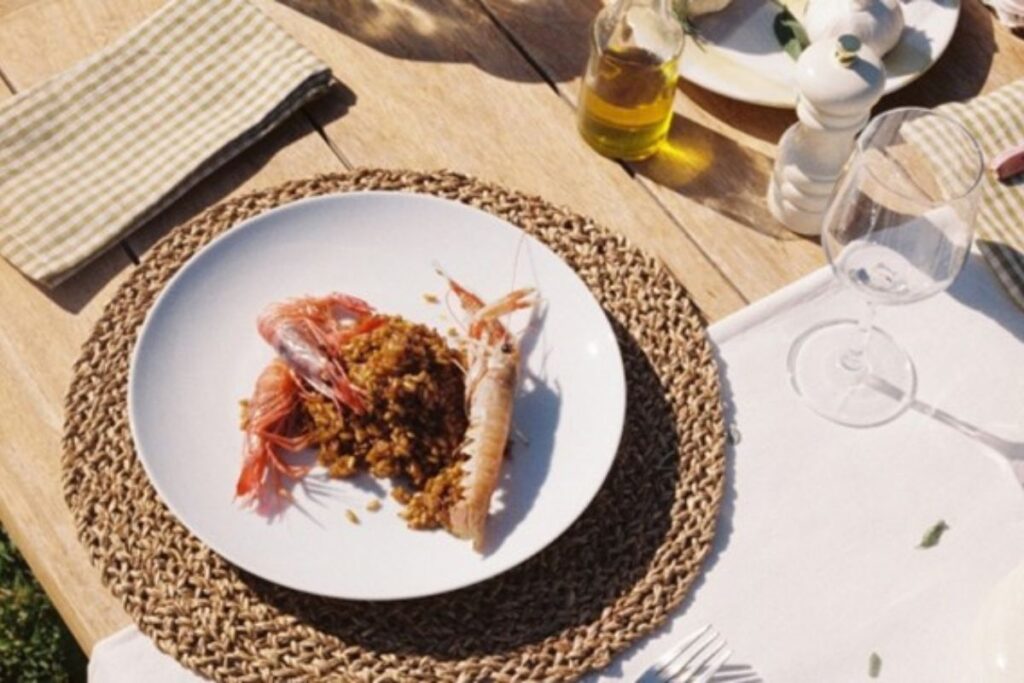
Credit: Mas Jofre Pals. Sara Guerrero. CBGTB Image Archive.
- Trinxat de Cerdanya
Trinxat de Cerdanya, a traditional mountain dish from the Girona Pyrenees, particularly associated with the Cerdanya region. It’s made by boiling cabbage and potatoes, then mashing them together and frying the mixture with bacon or pork fat until lightly crisp on the outside. Its origins are rural, and potatoes were plentiful. Today, it remains widely served in Pyrenean restaurants and is especially popular during winter, although it is available year-round. - Bunyols de Bacallà (Cod fritters)
Bunyols de Bacallà are small fritters made from shredded salt cod mixed with garlic, parsley, flour, and egg, fried until golden and crisp. Salt cod became a stable ingredient in Catalonia due to its long preservation life before refrigeration.
It played a crucial role in coastal trade and religious observance, particularly during Lent, when meat consumption was restricted. These fritters are served as an appetiser in many restaurants and tapas bars throughout the Costa Brava and Girona Pyrenees.
- Suquet de Peix (Fish stew)
Suquet de peix originated in a fishermen’s recipe in the Costa Brava region. It was originally made on fishing boats using unsold fish and pantry staples. The recipe combines various types of white fish depending on the day’s catch, potatoes, tomatoes, garlic, and a classic Catalan picada of nuts (usually hazelnuts or almonds), garlic and parsley. Suquet de peix has become a recognised regional speciality after being a simple working-class meal. Today, it is commonly found on menus in restaurants along the coast, especially in towns like Roses, Palamós, Calella de Palafrugell and Cadaqués. It is still one of the most characteristic seafood recipes of the Costa Brava.
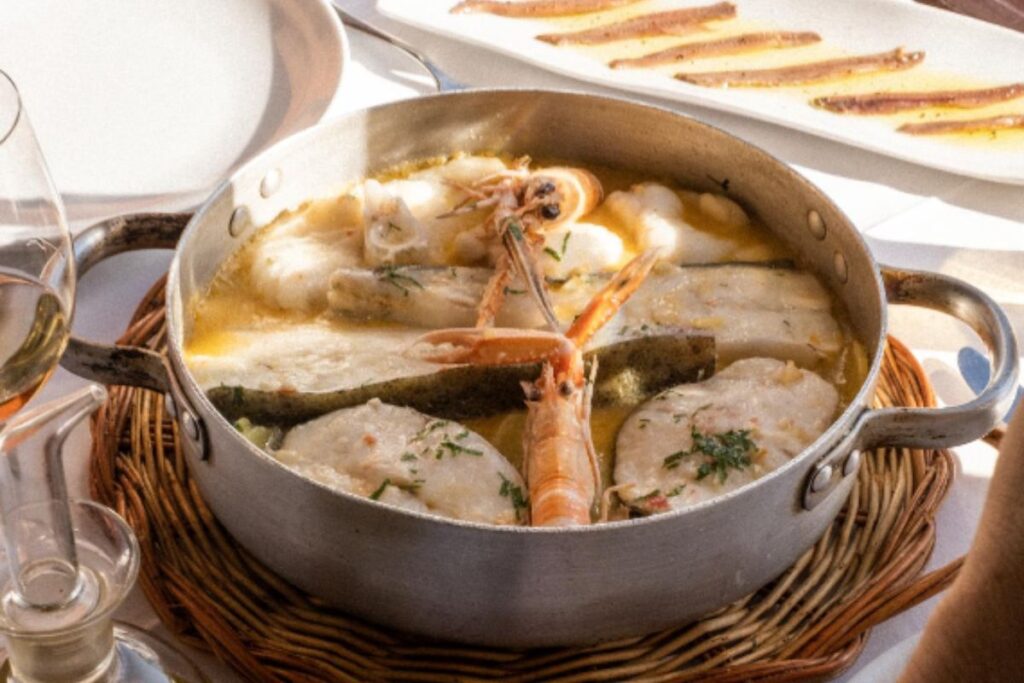
Credit: Es Baluard Cadaqués. Sara Guerrero. Arxiu Imatges.
- Pollastre amb llagosta (Chicken with lobster)
Pollastre amb llagosta is one of the most famous dishes that showcase the ”sea and mountain” tradition of Catalan cuisine, where the sauce may include tomato, wine, and a nut-based picada. The combination of chicken and lobster represents the historical fusion of farming communities in the mountains and fishing communities. Traditionally served at special occasions, it has become a staple in many restaurants in Costa Brava. This dish showcases how the Catalan cuisine is able to combine opposing ingredients to create a balanced and complex flavour. - Xuixo de Girona (Cream-filled fritters)
The xuixo is the most representative pastry of the city of Girona. A cylinder-shaped pastry that is deep-fried and filled with cream and sugar. Its origins start in the early 20th century, and it’s still very common in bakeries. Traditional xuixos are filled with pastry cream, they are also made with chocolate or fruit preserves. It is usually eaten as a breakfast pastry or as a snack.
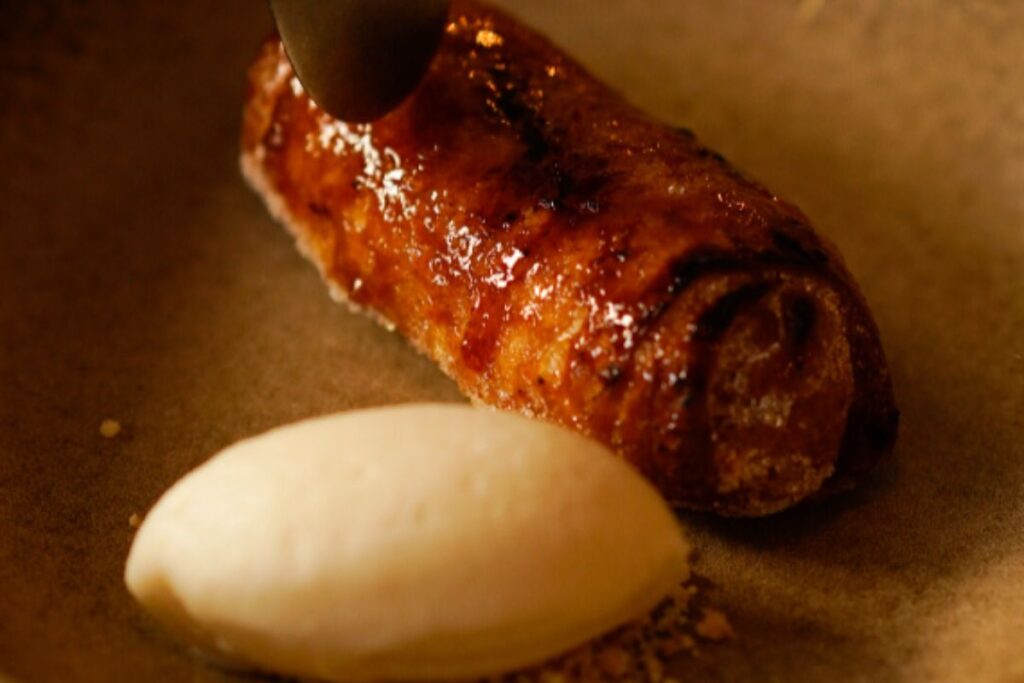
Credit: Arròs 9. Costa Brava Hotspots.
- Taps de Cadaqués
Taps are small sponge cakes, originating in Cadaqués, a coastal town. The history stretches back to the 18th century, when trade routes between Catalonia and the Caribbean influenced their creation. The cakes were typically flavoured with rum and baked in individual moulds. The cork-like appearance of the cakes led to their name, as “tap” is the word for ”cork” in Catalan. Today taps remain a local speciality and are made in Cadaqués to this day, symbolising the town’s historical link with overseas trade.
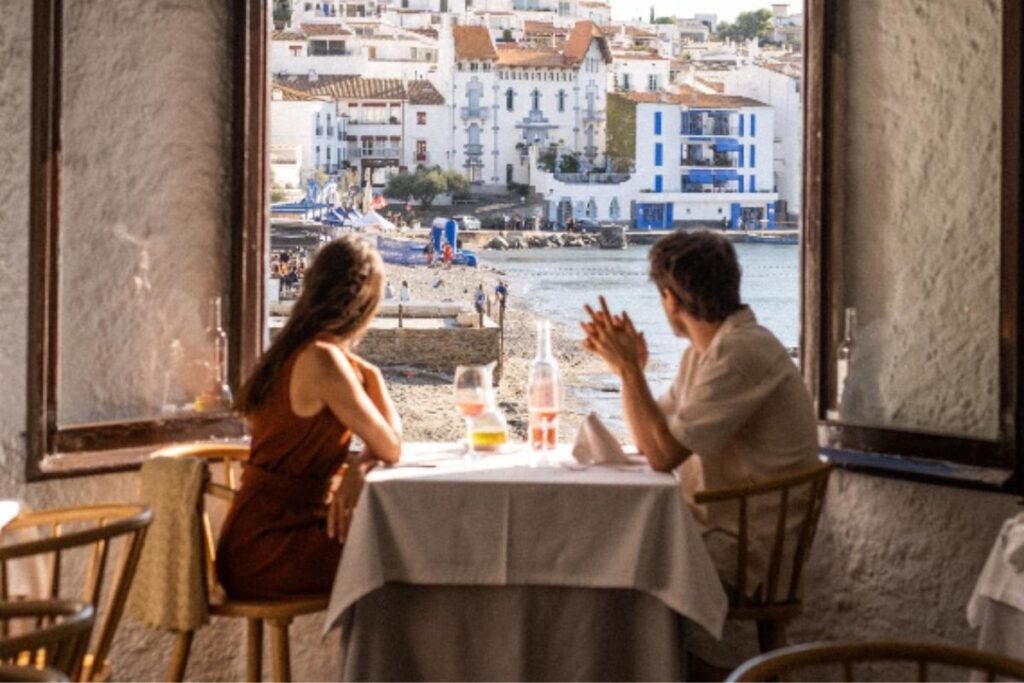
Credits: Es Baluard Cadaqués. Sara Guerrero. Arxiu Imatges.
Images supplied